

Traffic Barricades
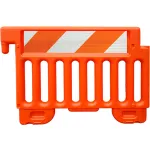
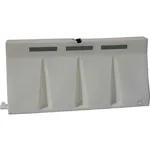
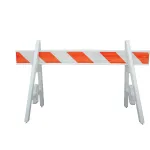
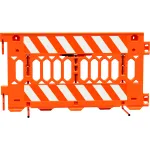
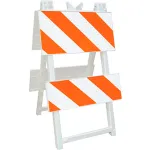
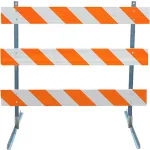
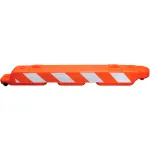
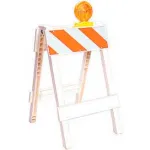

ADA Barricades
| Compare | Image | Color | Height | Length | Type | Width | Model # | Price | |
|---|---|---|---|---|---|---|---|---|---|
 | Orange | 38 in | 43 in | ADA Barricade | 2 in | WBB2350241 | as low as $149.95 Save $10.00 (6%) | ||
 | Orange | 38 in | 43 in | ADA Barricade | 2 in | WBB2350203 | as low as $149.95 Save $10.00 (6%) | ||
 | White | 38 in | 43 in | ADA Barricade | 2 in | WBB2350204 | as low as $149.95 Save $10.00 (6%) | ||
 | White | 38 in | 43 in | ADA Barricade | 2 in | WBB2350210 | as low as $155.95 Save $10.00 (6%) | ||
 | Orange | 38 in | 43 in | ADA Barricade | 2 in | WBB2350214 | as low as $155.95 Save $10.00 (6%) | ||
 | White | 38 in | 43 in | ADA Barricade | 2 in | WBB2350242 | as low as $159.95 Save $10.00 (6%) | ||
 | Orange | 38 in | 72 in | ADA Barricade | 3 in | WBB3124609 | as low as $185.95 Save $14.00 (7%) | ||
 | Orange | 38 in | 43 in | ADA Barricade | 2 in | WBB2350246 | as low as $159.95 Save $10.00 (6%) | ||
 | White | 38 in | 43 in | ADA Barricade | 2 in | WBB2350199 | as low as $155.95 Save $14.00 (8%) |

Safety Polyethylene Barricades

A-Frame Barricades

Interlocking Barricade Systems

Type II Barricades

Type III Barricades

Airport Barricades

Type I Barricades

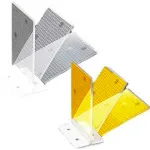
Barrier Mount Reflectors

Barricade Sign Stands

Fold Flat Barricades

Traffic Access Systems
Related Products
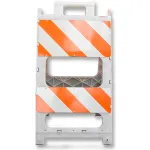
Maximize visibility with the White Hydrocade™ featuring High-Intensity Prismatic sheeting. Built from impact-resistant polyethylene, it provides long-lasting performance for work zones, airports, and parking areas. Each barricade interlocks quickly and fills with up to 81 gallons of water for a stable, heavy-duty setup. The reflective sheeting ensures outstanding night-time visibility and compliance with MUTCD standards. Compact stacking, two forklift access points, and corrosion-free design make it a reliable, American-made solution for traffic and pedestrian safety management.
NARROWCADE FOLDING TRAFFIC BARRICADES / SIGN STANDS 36"H Sign Stand with No Sheeting Block off hazards or direct traffic with these barricades and sign stands. Compact design is great for indoor or outdoor environments, while providing compact storage. These small folding barricades can be used in narrow walkways, hallways, driveways, sidewalks and more. Sign stands are stackable to put up multiple units together for transportation. Built-in brackets accept Optional Flashing Lights (sold separately). NCHRP 350 compliant. Federal Highway Administration Approved. Measures 13"W x 3"D when ...
The White Hydrocade™ with Engineer-Grade reflective sheeting combines high visibility with a clean, professional look for work zones and events. Durable polyethylene construction withstands impacts and harsh conditions. Each unit interlocks securely and fills with 81 gallons of water for added weight and stability. The flat face design supports reflective striping on both sides, meeting MUTCD standards for channelizing devices. Compact stacking and forklift access points streamline storage, setup, and transport - delivering performance and appearance that lasts.
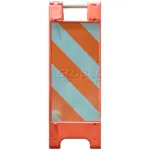
Plasticade® Minicade Barricade Sign Stand w/ 2 Panels & No Sheeting, 13"W x 36"H, Orange - Pkg Qty 2
NARROWCADE FOLDING TRAFFIC BARRICADES / SIGN STANDS 36"H Sign Stand with No Sheeting Block off hazards or direct traffic with these barricades and sign stands. Compact design is great for indoor or outdoor environments, while providing compact storage. These small folding barricades can be used in narrow walkways, hallways, driveways, sidewalks and more. Sign stands are stackable to put up multiple units together for transportation. Built-in brackets accept Optional Flashing Lights (sold separately). NCHRP 350 compliant. Federal Highway Administration Approved. Measures 13"W x 3"D when ...
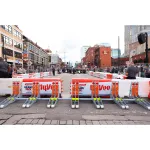
Multi-functional barricade system meets ADA requirements Use as an ADA Pathway, Crowd Control, Manhole Guard, Or Work Area Channelizer Continuously detectable edge at barricade top and bottom Exclusive tripod leg system, no sandbags needed when using all 3 feet - anti-trip foot on one side - two larger feet on other side - use only larger feet with sandbags for ADA Compliance Easy handle turn deploys barricade feet! Shape to any layout, units pivot 120º - 3 units in triangle layout for manhole guard Robust dual connectors create easy to use linking system Smooth, comfortable guardrail - ...
Related Items
72 inch barricadeangle iron plastictype ii traffic barricadeangle iron feettype iii barricadeRelated Categories
traffic cone orangeTraffic Barricades for Work Zones, Parking Areas & Temporary Traffic Control
Traffic barricades are temporary traffic-control devices used to restrict access, close or redirect travel paths, identify work zones, and guide vehicles or pedestrians around hazards. They are commonly used for roadwork, construction, parking facilities, facility maintenance, temporary closures, airports, and other areas where a clearly defined boundary is needed.
Traffic barricades range from lightweight folding and A-frame designs to Type I, Type II, Type III, interlocking, water-fillable, and pedestrian barricades. The right type depends on the application, the area being restricted, visibility needs, traffic conditions, portability, and applicable traffic-control requirements.
What to Consider When Choosing Traffic Barricades
Start by determining what the barricade needs to accomplish and who or what it needs to control.
- Application: Consider whether the barricade will guide vehicles, restrict pedestrians, close a roadway or lane, identify a work zone, or establish a temporary boundary.
- Barricade type: Type I, Type II, and Type III barricades have different configurations and uses. Select the appropriate design for the traffic-control plan and application.
- Visibility: Bright colors, reflective sheeting, and compatible warning lights or signs can help make barricades more noticeable.
- Portability: Folding, A-frame, and lightweight barricades can be useful when equipment needs to be moved, stored, or frequently redeployed.
- Stability: Consider wind, traffic, surface conditions, and surrounding activity. Some barricades use weighted or water-fillable designs for additional stability.
- Connection: Interlocking barricades can be joined to create a longer, more continuous boundary.
- Pedestrian access: Where pedestrians need to be guided or restricted, select a barricade designed for the intended pedestrian application and applicable accessibility requirements.
- Environment: Roadwork, parking facilities, construction sites, airports, and indoor facilities can require different barricade designs and features.
Types of Traffic Barricades
Traffic barricades differ in size, configuration, visibility, and intended use.
| Type | Common Uses | What to Consider |
|---|---|---|
| Type I Barricades | Temporary traffic control and work areas | Single rail provides a visible warning or boundary; verify suitability for the traffic-control application |
| Type II Barricades | Work zones, roadwork, traffic guidance | Two rails provide a larger visible marking area than Type I designs |
| Type III Barricades | Road and lane closures, larger restricted areas | Multiple rails create a substantial visual closure device |
| A-Frame & Folding Barricades | Facility maintenance, construction, temporary restricted areas | Portable designs can be quickly deployed, moved, and stored |
| Interlocking Barricades | Pedestrian routes, work zones, temporary boundaries | Multiple units connect to form a continuous barricade line |
| Water-Fillable Barricades | Construction, traffic-control areas, temporary boundaries | Can be filled for added stability; review individual product specifications and intended use |
| ADA/Pedestrian Barricades | Pedestrian routes, construction areas, temporary access control | Select designs appropriate for pedestrian guidance and applicable accessibility requirements |
Type I vs. Type II vs. Type III Barricades
Type I, Type II, and Type III barricades are distinguished primarily by their configuration and the amount of visible barricade rail area they provide.
Type I barricades use one horizontal rail and can provide a visible warning or boundary for temporary traffic-control applications.
Type II barricades use two horizontal rails, increasing the visible surface area presented to approaching traffic.
Type III barricades use three horizontal rails and create a larger, more prominent closure device. They are commonly associated with road, lane, and other substantial closures.
The number of rails alone should not be used to determine which barricade is appropriate. Placement, dimensions, reflective markings, traffic conditions, and other requirements depend on the specific application and applicable traffic-control standards.
Traffic Barricades vs. Traffic Cones
Barricades and traffic cones can both identify temporary hazards and influence traffic movement, but they provide different levels of visual separation.
| Feature | Traffic Barricades | Traffic Cones |
|---|---|---|
| Primary Function | Establish a defined closure, boundary, or traffic-control point | Mark hazards and guide vehicles or pedestrians |
| Visual Boundary | Wider profile creates a more substantial visual restriction | Individual markers create a flexible traffic path or perimeter |
| Portability | Varies from lightweight folding models to larger barricade systems | Generally easy to deploy and reposition |
| Connecting Units | Interlocking models can create a continuous boundary | Compatible cones can be connected with bars, chains, or belts |
| Common Applications | Closures, work zones, restricted areas, pedestrian control | Lane guidance, hazards, temporary work areas, parking lots |
| Best Choice When | A more defined closure or boundary is needed | Flexible, quickly repositioned guidance is needed |
Barricades and cones can also be used together as part of a broader temporary traffic-control setup when appropriate for the application.
Choosing Barricades by Application
The location and type of traffic being managed can help determine which barricade design is appropriate.
- Roadwork and construction zones: Barricades can identify closures, work areas, lane changes, and restricted sections of a site.
- Parking lots and garages: Portable barricades can temporarily close entrances, parking areas, lanes, or sections undergoing maintenance.
- Warehouses and industrial facilities: Barricades can restrict access to maintenance areas, equipment zones, hazards, and temporary work areas.
- Pedestrian areas: Interlocking and pedestrian barricades can establish temporary routes or help restrict access around construction and maintenance work.
- Facility maintenance: Folding and portable barricades can be deployed around repairs, cleaning, spills, and other temporary hazards.
- Airports and transportation facilities: Barricades designed for these environments can help identify restricted or controlled areas according to site-specific requirements.
Water-Fillable vs. Lightweight Portable Barricades
The need for stability versus portability can help determine which barricade design is more practical.
Water-fillable barricades can be positioned while empty and then filled according to the manufacturer's instructions to add weight and stability. They can be useful when a more substantial temporary boundary is needed.
Lightweight and folding barricades prioritize portability. They can be easier to transport, deploy, reposition, and store, making them useful for maintenance teams and other applications where the restricted area changes frequently.
A water-fillable barricade should not automatically be assumed to provide crash protection. Use only products specifically designed and rated for impact protection when that level of protection is required.
Traffic Barricade Accessories
Barricade accessories can improve visibility, communication, mounting, or functionality. Depending on the barricade system, accessories may include reflectors, warning lights, signs, sign stands, mounting hardware, replacement components, and connectors.
Check compatibility with the specific barricade before adding accessories, and follow applicable requirements for signs, reflective markings, and warning devices when the barricade is used for roadway traffic control.
Frequently Asked Questions
Have a Question? Our experts might already have the answers.
What are traffic barricades used for?
Traffic barricades are used to restrict access, identify work zones, close or redirect travel paths, and guide vehicles or pedestrians around hazards. Common applications include roadwork, construction sites, parking facilities, facility maintenance, and temporary closures.
What is the difference between Type I, Type II, and Type III barricades?
Type I barricades have one horizontal rail, Type II barricades have two, and Type III barricades have three. The additional rails provide a larger visible barricade area. The appropriate type depends on the traffic-control application and applicable requirements.
What are Type III barricades used for?
Type III barricades provide a large, highly visible closure device and are commonly used for road closures, lane closures, construction zones, and other areas where a substantial traffic restriction needs to be clearly identified.
What is the difference between a traffic barricade and a traffic cone?
Traffic barricades create a wider, more defined closure or boundary, while traffic cones provide individual markers that can guide traffic or identify hazards. Barricades are useful for more substantial restrictions, while cones provide flexible, quickly repositioned guidance.
What are water-filled traffic barricades used for?
Water-fillable barricades create temporary boundaries and can be filled according to the manufacturer's instructions to increase weight and stability. They are used in construction, traffic-control areas, parking facilities, and other temporary restricted areas.
Are water-filled barricades crash barriers?
Not necessarily. A water-fillable design alone does not mean a barricade provides vehicle impact protection. If crash or impact protection is required, select a system specifically designed and rated for that purpose.
Can traffic barricades be used for pedestrians?
Yes. Barricades designed for pedestrian applications can help define routes, restrict access, and separate pedestrians from temporary hazards or work areas. Select a design appropriate for the application and applicable accessibility requirements.
Can traffic barricades be used in parking lots?
Yes. Traffic barricades can temporarily close parking spaces, lanes, entrances, exits, or maintenance areas and can help redirect vehicles or pedestrians around restricted sections of a parking lot or garage.
When should I use a barricade instead of a traffic cone?
Consider a barricade when a wider and more clearly defined closure or boundary is needed. Traffic cones may be more practical when the goal is flexible lane guidance, hazard marking, or a temporary perimeter that needs to be repositioned frequently.
How do I choose a traffic barricade?
Consider the application, vehicle or pedestrian traffic, required visibility, barricade type, portability, stability, connection options, and environment. For roadway or pedestrian traffic-control applications, also verify applicable standards and site requirements.